
Solar Panel Installation in Lismore
Solar Sized to How You Actually Use Power
Power bills in Lismore climb hardest over summer, when the aircon runs and the sun that could be paying for it lands on an empty roof. At Elec One, we handle solar panel installation from the first site assessment through to grid connection, sizing the system around your actual consumption rather than a package off a price list. We work at the other end of the scale too, running annual inspections on commercial arrays and building off-grid ground mounts on rural stations. Roof orientation, shading and how much of your usage falls in daylight all change what is worth installing. Where the numbers point that way, we'll suggest solar batteries over more panels. Call 0468 778 248 to talk it through.
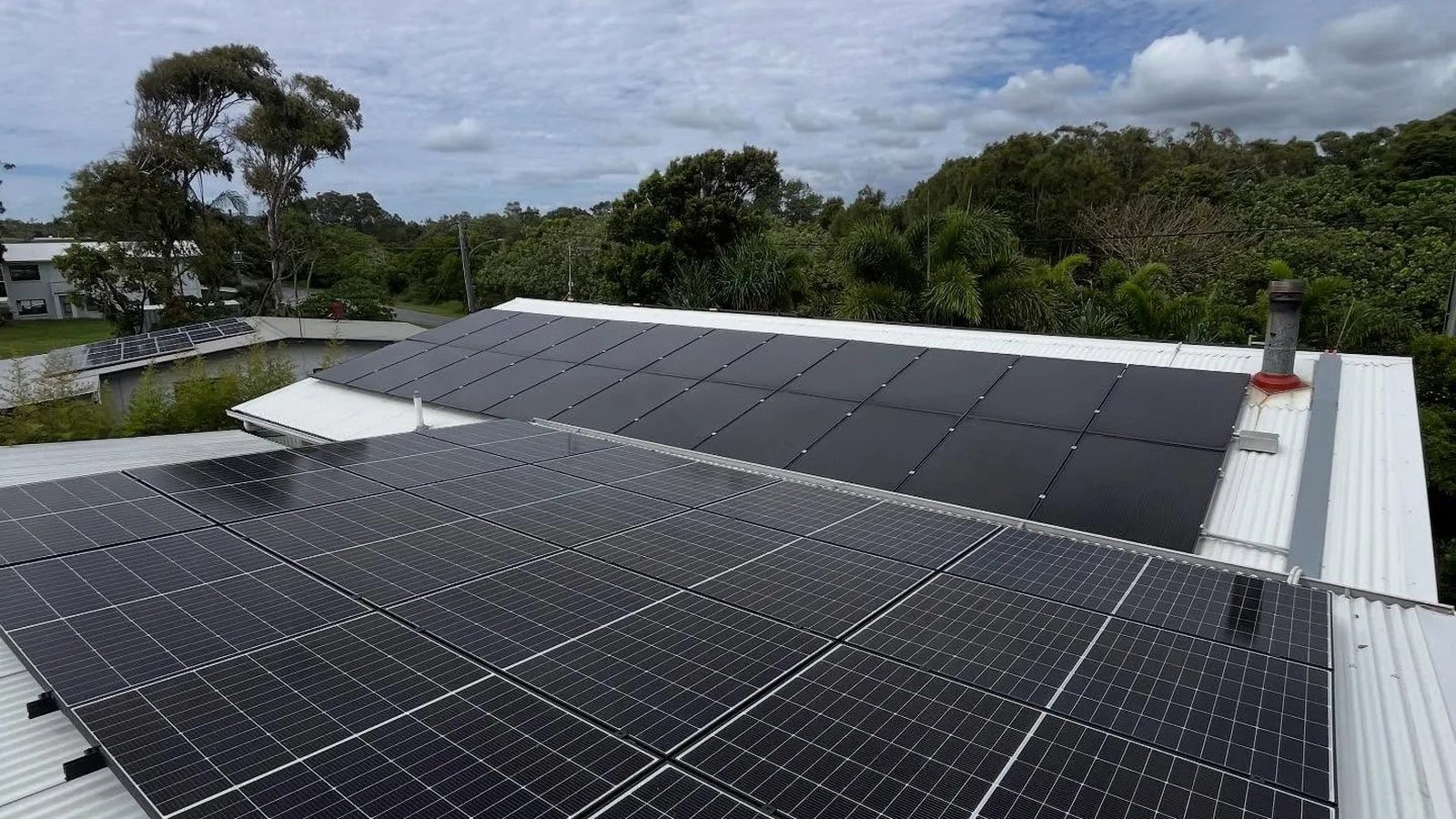
What Our Solar Installations Cover
Every install runs through the same stages, whether it's a residential rooftop system or a commercial array.
We start with a site assessment covering roof orientation, shading through the day and your consumption history. The system size and panel layout come out of that, not from a standard package.
Panel and inverter selection is matched to the site rather than to whatever we have in the van. Where a site has multiple roof planes or partial shading, we'll look at microinverters or optimisers instead of a single string.
Mounting and wiring are installed to handle Northern Rivers weather. We repaired and upgraded a number of systems damaged by fallen trees after Cyclone Alfred, and mounting quality is often what separates a repair from a replacement.
We handle the grid connection application and the paperwork for available rebates. Once the system is commissioned we'll walk you through the monitoring so you can see what it's producing.
Frequently asked questions
System size is calculated from a property's actual electricity consumption, not from the size of its roof. Daytime usage patterns matter most, since power used as it's generated is worth more than power exported.
Partial shading doesn't rule out a system, but it does change the design. Microinverters or power optimisers let unshaded panels keep producing at full output while shaded ones drop back, instead of dragging down the whole string.
Panels mostly look after themselves, though a rinse to clear dust, salt or bird mess helps output in dry stretches. Inverter, isolator and connection checks every couple of years catch faults early, and thermal imaging picks up hot cells and failed junction boxes that a production figure alone won't reveal.